Bob W. is a Finnish, technology-driven accommodation brand that has grown quickly across Europe. It describes itself as a mix of the consistency of a hotel and the character of a local apartment. The idea is that you stay as if with a friend in town, and the friend is Bob.
What made it interesting to me is the model. There is no reception. Booking, check-in, the keyless door, extras and 24/7 chat support all run through a guest app. Behind the scenes there is only a fraction of a normal hotel’s staff.
So the question I wanted to answer was: can a staff-light concept still feel personal, or does the efficiency leave the guest cold?
The signals a place sends
Experience designers talk about cues: the signals a business places on purpose to create an impression. The guest reads those signals and decides what they mean. I sorted Bob W’s cues into three groups: what works, what you see and feel, and what comes from people.
What works
The app is the backbone of the stay, and it did its job. The door code opened the door, and the chat answered within minutes. Before arrival, clear instructions built confidence and a bit of anticipation. A free morning sauna and gym access felt generous.
Everything a guest needs sits in one place. Booking, online check-in, the door code, breakfast, extras like the rooftop sauna and even a yoga app are all a tap away, so the app shows you what to do without anyone having to explain it. Bob W reports that every guest uses the app, which gives the brand a direct line to each stay.
What you see and feel
This was the richest layer. The entrance has no visible desk and no physical keys, and that absence tells you something right away. A light board points you to the app. In the lobby, a noticeboard holds other guests’ Helsinki tips and polaroids, so you can add your own and become part of the local story.
The details carry the theme: Finnish design classics, designer cups with the ceramicist’s name behind them, coffee from a Helsinki roastery, and a sauna scent made with a local collaborator. Even the app helps. Its handwritten blue font and small animations make a screen feel like a note from a person.
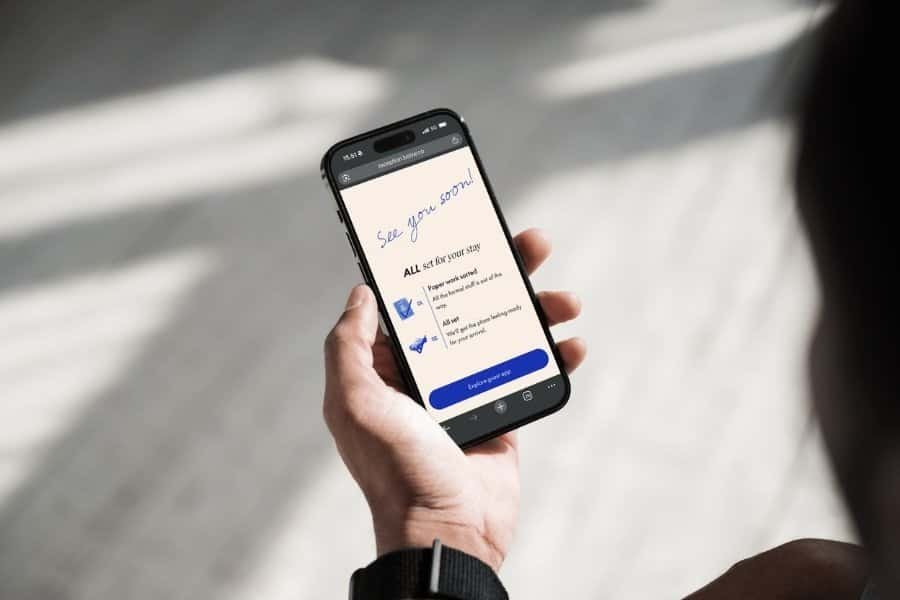
Bob W’s browser-based app.
"While everything worked, I did not think about the missing reception at all"
Where the people are
Here Bob W does something unusual, because the human layer is mostly digital. Bob acts as an invisible host, pictured as a pair of blue hands working in the background.
Messages arrive on WhatsApp in a warm, informal voice: “Did you make it into the apartment alright?” Around 95% of them are automated, and a live agent steps in only when something is flagged. The voice stays the same either way, and that consistency is what makes the whole concept hold together.
Taken together, the cues are coherent. Design, technology and voice all point to the same idea of a friend in town.
Did I miss a human?
For most of the stay, no. While everything worked, I did not think about the missing reception at all. Bob answered quickly, the instructions were clear, and the tone felt friendly.
I noticed the absence when a small thing did not go as planned. For a moment I wanted someone next to me who could simply sort it out. That was when the invisible host stopped feeling effortless.
Without visible staff, you also start guessing who is who, and I found myself wondering who Bob and his crew really are. The warm voice felt a little less simple after that.